Miyako – Six months after the tsunami


After hearing about the impacts of the disaster on the region from my former colleagues at Iwate prefectural government, it was finally time for me to go to the coast to see for myself the aftermath of the earthquake and tsunami. Pulling into downtown Miyako, I was initially surprised at how little seemed to have changed, at least in the main business district near the station.

My first stop was Miyako Keifu Special Education School. This school is located high in the hills north of Miyako, so was not damaged by the tsunami. Luckily, the tsunami occurred during school hours, so the kids were safe at school. However, the school was cut off from other parts of town for several days, so over 100 students, teachers and local residents slept in the gym in the days after the disaster. Power and water were also cut off, which posed extra challenges for the dedicated teachers as they tried to look after students with a range of special needs. Some of these kids lost relatives and their homes in the tsunami, so there are ongoing challenges for the school community.

 
I also visited Miyako Kita High School. I used to work with the current principal, Hiraga-sensei, when he worked at the Iwate Board of Education in Morioka and was in charge of looking after the JET program teachers in Iwate. His school, located in Taro in northern Miyako, was undamaged in the disaster and was used as an evacuation centre for the people of Taro for several months after the tsunami. Hiraga-sensei explained that teachers all over Tohoku had a duty of care to stay with their students until each and every student could be collected from school. This meant that many teachers could not pick up their own children or spend time with their families immediately after the tragedy.

 
I had two main purposes in visiting these schools on the coast. Firstly, I wanted to assist in their English classes. A significant number of foreign teachers left Japan after the tsunami (particularly as fears emerged over the stability of the Fukushima nuclear power plant) so many students now have few opportunities to speak to a native English speaker. More importantly, however, I wanted to deliver the messages of support that JET programme alumni and other concerned members of the community in Sydney had written for the people of Iwate.

The students were so glad to receive messages of support from Australia, and to know that people overseas were thinking about them. I was impressed with how energetic and bright the students were, despite the hard times they had experienced.

Hiraga-sensei and the teachers at Miyako Kita were extremely generous with their time, showing me around some of the worst affected areas in Taro and Miyako.

Taro has experienced large tsunamis in the past, and as a result the town spent many years constructing tsunami barriers that were considered some of the best in the world. Unfortunately, the shape of Iwate’s coastline – with lots of steep cliffs and narrow inlets – makes it especially susceptible to tsunami damage.  The water is pushed up by the cliffs and funnelled into the narrow bays. The tsunami wave on 11 March was over 38 metres high in Taro (the highest recorded in Japan). It went straight over the top of the 10 metre-high concrete wall and destroyed most of the town.
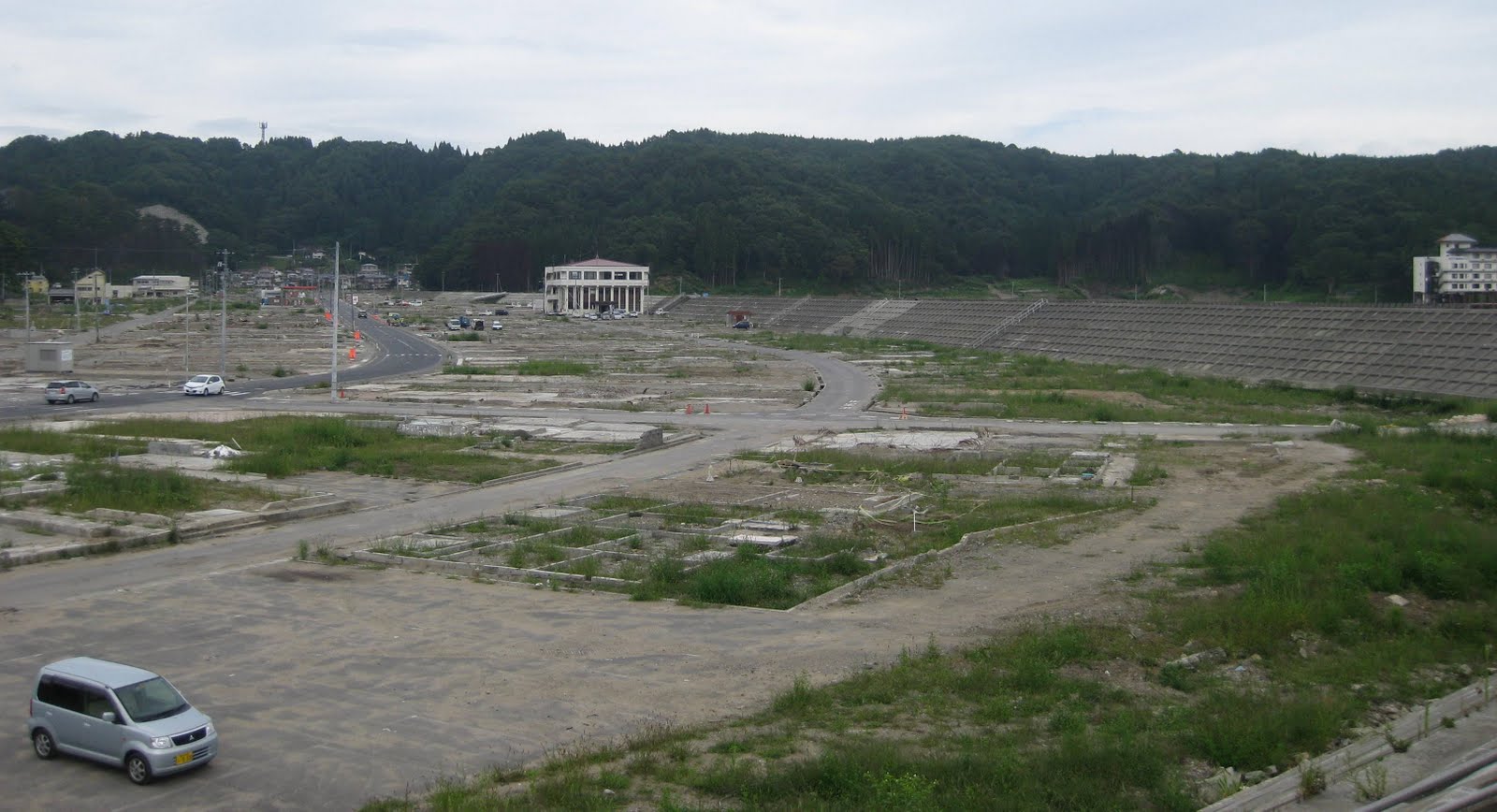


From a distance, the plain where Taro once stood looks like a green field, but up close you can see the concrete foundations where houses used to stand, and even make out the outlines of individual rooms. Nature is starting to take over already, with grass filling in the gaps.


I was surprised that so much has already been cleaned up. The problem now is finding somewhere to put the rubbish - six months after the tsunami, there are still massive piles of debris around the town, including stacks of cars. 


The people of Iwate have made great progress in cleaning up their towns and starting to rebuild their lives. But they still have a long way to go, and will need our ongoing support for many years.  


Tea time? - Get some Nambu Tekki ironware


One of Iwate’s most famous local products - Nambu Tekki Ironware - is popular throughout Japan and around the world. Nambu Tekki has been made in and around Morioka for around 400 years. You can watch artisans making this traditional craft at the Iwachu cast-iron works.

 
Iwachu began operations in 1902, and has been making high-quality ironware products ever since. They  specialise in a range of traditional Nambu Tekki products including kettles, teapots, wind chimes and lanterns, as well as modern cookware.

Watching the craftsman work the iron looks like very hot and back-breaking work...


 ... but they make the best tea pots!


Morioka - My old home town


One of my favourite things in Morioka is the Ishiwarizakura, the Rock-splitting Cherry Tree. This tree, which has grown out of a solid granite boulder, is almost 400 years old and has been designated a National Treasure. More importantly, by showing that a single seed can take root and thrive in even the most inhospitable surroundings, the tree symbolises the strength and endurance of the people of Iwate. Looking at what has happened and what they have achieved in the past 6 months, I think this symbol is even more fitting now.


Wandering around the grounds of Hachimangu shrine on a warm August evening, I could hear the echo of taiko drums. This is a very common sound in Morioka during the summer, as the whole city practices for the Sansa Odori festival, held each year at the beginning of August. Sansa Odori is listed in the Guinness Book of Records as the largest gathering of taiko players in the world, with around 10,000 drummers and dancers parading through the city. Although I was too late to see it this year, hearing the children practising taiko in the shrine gardens brought back many wonderful memories of my time in Morioka.


My other favourite things in Morioka

 Mt Iwate and the Kitakami River


 The 16 Buddhist Disciples


  Hachimangu Shrine (the largest shrine in Iwate)


Beautiful skies


 Morioka Reimen


 Nambu senbei - the best rice crackers in the world!

Iwate Prefecture's Basic Reconstruction Plan


The situation 6 months after the tsunami

The Great East Japan Earthquake and Tsunami has had a devastating effect on Iwate. To date, almost 4,650 people have been confirmed dead, and almost 2,000 are still missing. Some communities, such as the towns of Otsuchi and Rikuzentakata in southern Iwate, have lost around 10 per cent of their entire population. 
 

Tsunami victims (as a share of the total population)


Almost 30,000 homes were destroyed by the waves. With damage to infrastructure and the loss of local businesses, the prefecture is also facing a huge financial cost.


Total tsunami damage in Iwate, as at 25 August 2011


The numbers are truly staggering. And it made me feel a bit apprehensive about going to the coast later in the week to see the situation for myself.


Iwate’s Reconstruction Plan

The prefecture has put together an 8-year reconstruction plan to rebuild local communities and try to prevent any further loss of life from other disasters that may strike again in the future. Although a top-down plan from the prefecture (with input from many experts), there is scope for individual communities to consult with residents and adapt the plan to suit local conditions.

The three main goals for the reconstruction process are:

1.    Ensuring safety
2.    Rebuilding lives
3.    Rebooting industries

The first goal, ensuring safety, includes things such as removing debris, monitoring radiation levels, constructing coastal protection facilities and improving transport access, community planning, and education. 

 Piles of cars destroyed by the wave. But where to put them all?

To help residents rebuild their lives, the prefecture is providing temporary housing for two years (so that everyone can finally move out of evacuation centres), focusing on job creation and re-training to assist people find employment, and supporting mental health support, especially for children.

The prefecture also plans to reboot local industries, particularly fisheries, agriculture, forestry, retail and tourism. 

I hope they are able to carry out their plan. There were concerns that local plans and operations are being held up by budget delays in Tokyo. On the other hand, however, I imagine the national government wants to make sure that funding is being used in the most effective way, to help all the people in Japan affected by this disaster.


Back to work! – Revisiting Iwate Prefectural Government


It didn’t feel so strange walking back into Iwate kencho, the prefectural government building where I had worked each day for three years. But there were signs that things were different now. The most obvious change was the efforts by everyone to conserve electricity (setsuden). Lights were switched off, so it was noticeably darker in the office. The air conditioning has been switched off all summer, so people have adapted by keeping hand-held fans (uchiwa) at their desks and wearing ‘Ganbaro Iwate’ polo shirts instead of suits. (This year the government is promoting ‘super cool biz’ dress codes, allowing public servants to ditch their suits and wear more casual, cooler clothing in the heat. Many people have taken the opportunity to wear T-shirts with ‘ganbaro’ and other messages of support on them, in a show of solidarity with the people affected by the disaster. )

The Governor of Iwate in super cool biz mode
Source: http://www.pref.iwate.jp/view.rbz?cd=13286&ik=0&of=1


After briefly meeting my successors in the NPO, Culture and International Relations Division, it was off to the Reconstruction Office, to hear about how they are planning to rebuild the coastal communities devastated by the tsunami.

Summer in Japan


I got a very pleasant surprise while riding the Narita Express into Tokyo – a view of the Sumidagawa fireworks! This great Tokyo Summer tradition is usually held on the last Saturday in July. This year, the Sumidagawa and other fireworks festivals around Japan were going to be cancelled (to save money and as part of the more general sombre mood in Japan), just as hanami (picnicking under the cherry blossoms) had also been scaled back earlier this year. Luckily, however, the authorities changed their mind and fireworks festivals, as well as traditional summer festivals such as the Morioka Sansa Odori, have been held all over Japan, helping to cheer up people and bringing communities together.


One of my other favourite things about Japan in summer – rooftop beer gardens!